
Connect in Action

Mitigating a cholera outbreak in Nigeria in days

A donor family put in $20,000. Within days, frontline workers in Nigeria were going door to door to mitigate a cholera outbreak.

Borno State, Nigeria, July 2026. (Video credit: PRIDE)
Geography
Nigeria
Funding
$20,000
Speed
9 days funding confirmed to first visit
Verified visits
4,603 at $4.34 each
Cholera patients referred
1,777 all of whom recovered
Start a conversationPick the program, geography, and amount.
A map of Nigeria with Borno State, in the north-east, enlarged to show its local government areas. The four served areas — Jere, MMC, Konduga and Ngala — are highlighted. NIGERIA BORNO
  • LGAs served — Jere, MMC, Konduga, Ngala
  • Other Borno LGAs
The PRIDE logo: a house outline cradled by two hands over a family group, beside the word PRIDE. PRIDE Peace Restoration and Integral Development Initiative, Borno State, Nigeria
Frontline

The beginning · Early May 2026

A local organization in Nigeria sees a cholera outbreak happening

PRIDE works through volunteers and health workers from the communities they serve. It hears about the cholera threat from community leaders, health facilities and its own workers.

It went differently last time

When flooding hit northern Nigeria in September 2024, affecting more than 150,000 households, PRIDE identified the need and activated its network. External funding arrived months later, after the emergency had worsened.

This time, they wanted it to go differently.
Connect Connect Connect

25 May 2026

The local organization takes action

PRIDE submits a concept note through Connect: their idea, a budget, and a plan to put it into action quickly.

Funders

16 June 2026

Matched, and funded

Within days the plan and service package were agreed, and matched with a donor family, Annie and Jacob Ma-Weaver.

$20,000USD to support 4,500 household visits

17 June 2026

9 days to the first visit

A standing agreement with the Borno State Ministry of Health meant PRIDE only had to notify the authorities, not apply for fresh approvals. It spent the days before launch briefing households.

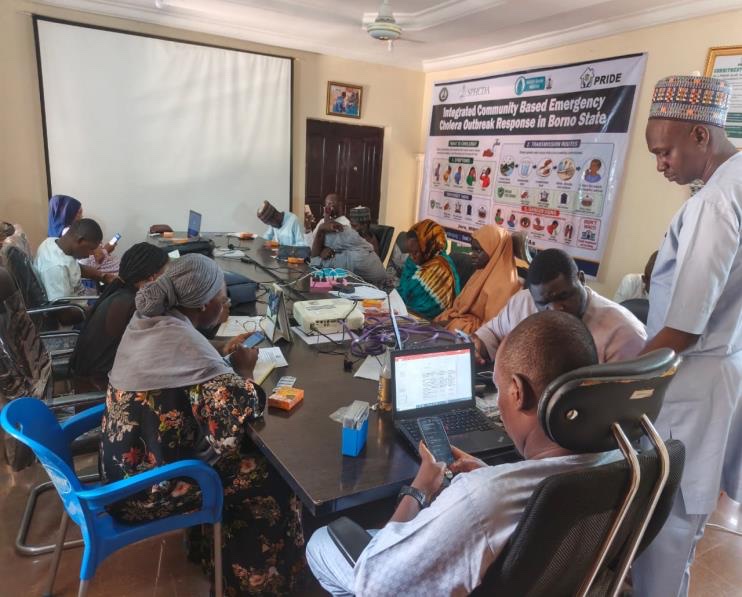
A planning room in Borno State under a banner reading Integrated Community Based Emergency Cholera Outbreak Response in Borno State. Around a long table, people work on phones and laptops, with supplies laid out in front of them.
The response is planned and the frontline team briefed. (Photo credit: PRIDE)
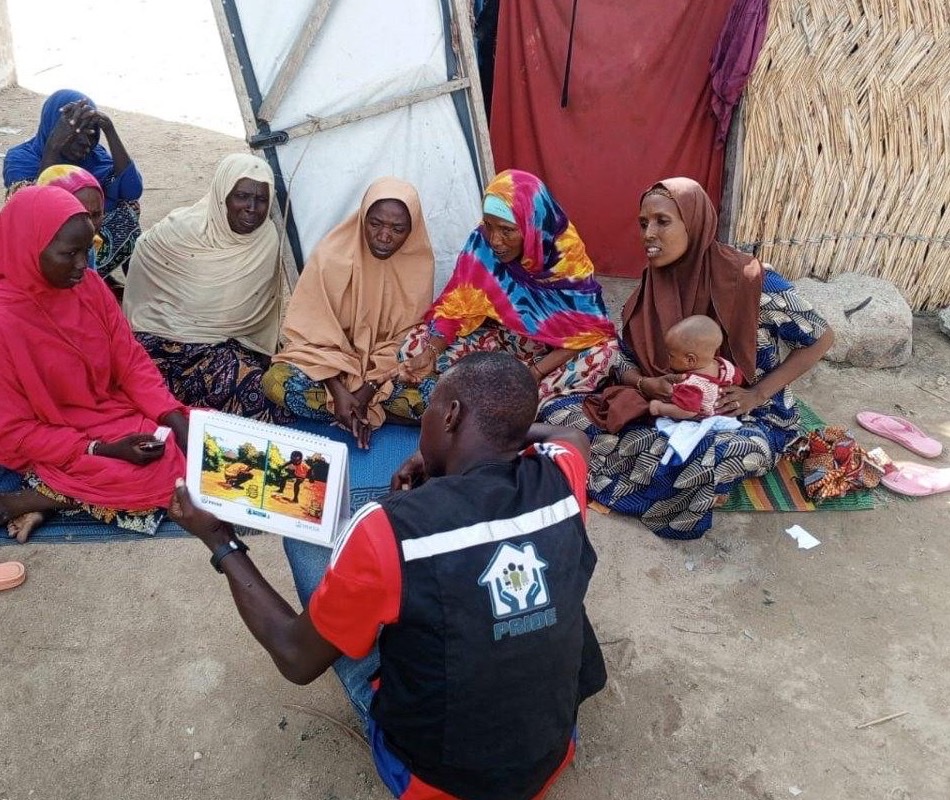
A frontline worker in a branded vest holds up an illustrated flipchart while seven women, two of them holding babies, sit on mats in a camp shelter and watch.
Door-to-door sessions reached households in Internally Displaced Persons (IDP) camps. (Photo credit: PRIDE)
Frontline

26 June – 31 July 2026

Door-to-door campaigns start

Frontline workers travel door-to-door across four government areas of Internally Displaced Persons (IDP) camps. Each visit included five interventions:

  • Hygiene promotion
  • Household water treatment
  • Oral rehydration solution (ORS) and zinc for early treatment of diarrhoea
  • Counselling on routine childhood immunization
  • Screening for cholera symptoms, with health facility referrals
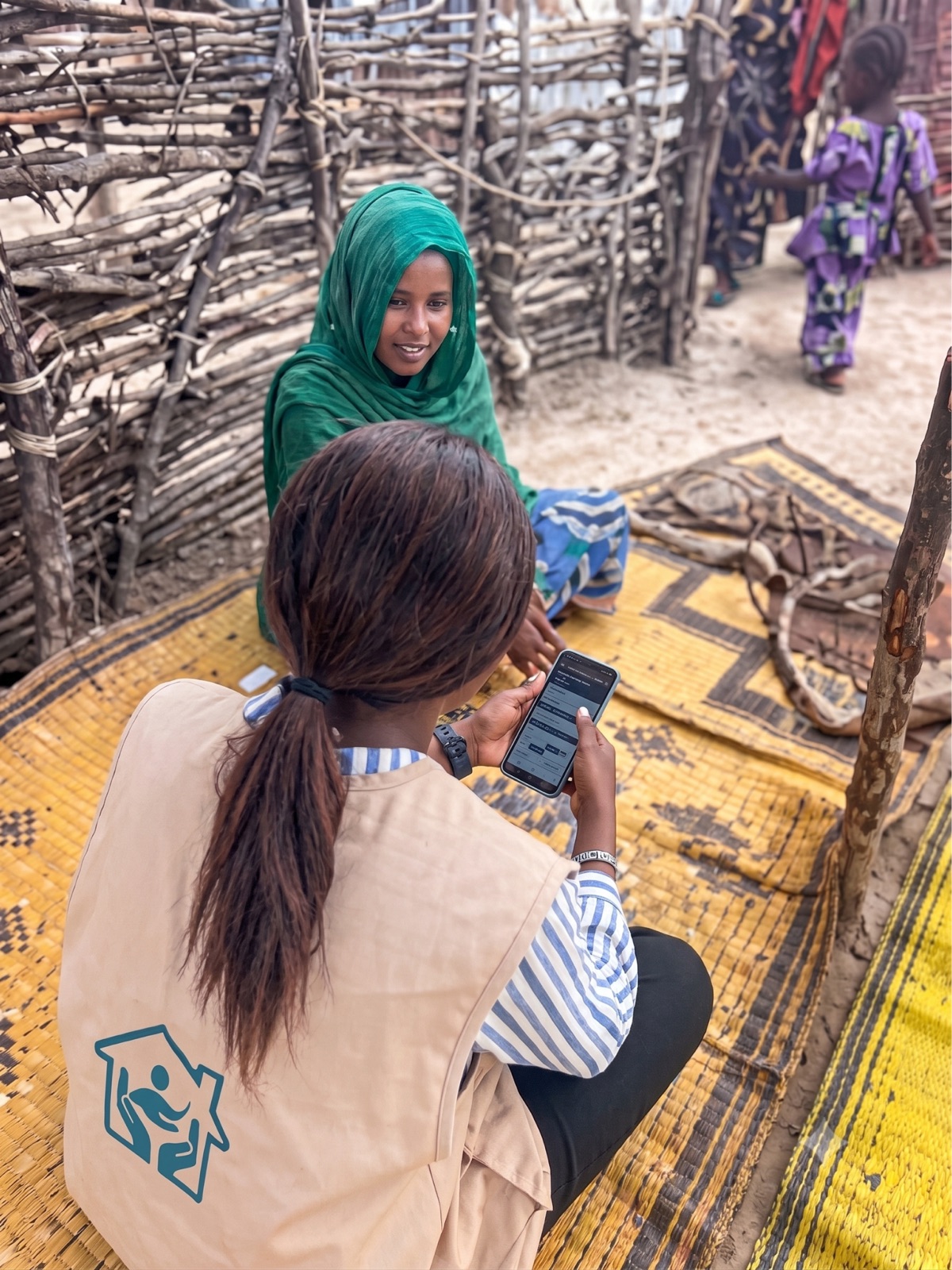
A frontline worker in a branded vest sits on a woven mat filling in a form on her phone, facing a woman in a green headscarf, inside a woven-stick compound.
Every household visit is recorded on the worker's phone as it happens. (Photo credit: PRIDE)
Frontline

One night, at around 2:00 a.m., a neighbor knocked at my door because her child was showing symptoms of cholera. Because I had received ORS through the PRIDE-supported response, I was able to provide it immediately while encouraging the family to seek appropriate medical care. The ORS helped relieve the symptoms, and the family later told me that the support provided at that odd hour had helped save their child's life.

A mother in Fariya camp, JereAs shared by Moses Tizhe, PRIDE's Executive Director
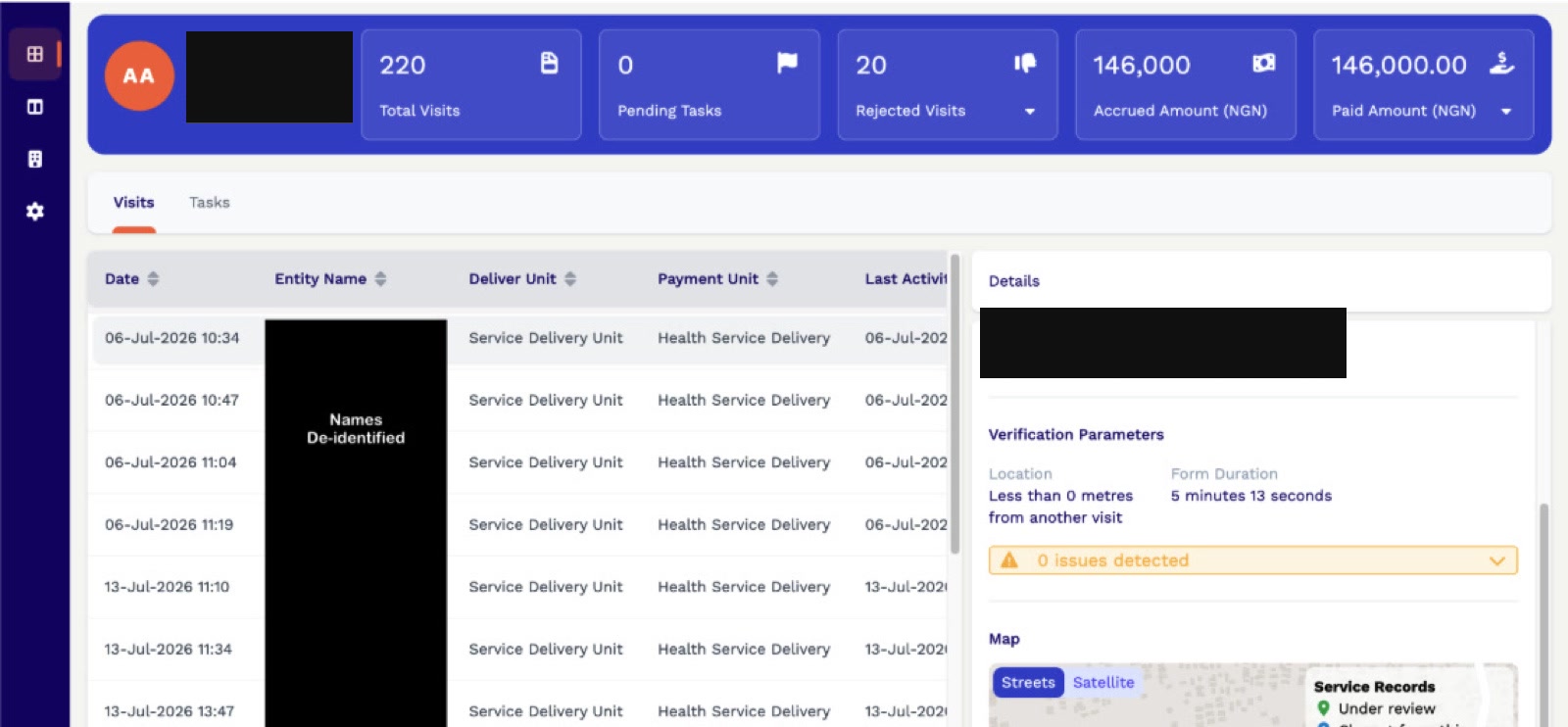
The Connect visits page for the Emergency Cholera Response program. A summary bar shows 220 total visits, 0 pending tasks, 20 rejected visits and 146,000 naira accrued and paid. Below it a table lists dated Service Delivery Unit visits, and a details panel shows verification parameters, a zero-issues flag and a location map. Worker and client names are blacked out.
Connect uses location and duration checks, photographs, and other verification methods to flag if anything looks wrong.

From 26 June 2026

Connect tracks on‑the‑ground activities in real time

Every visit is recorded and verified in real time. PRIDE is paid only for visits that are verified. Throughout, PRIDE coaches frontline workers as the campaign runs, and funders can see what is being delivered and paid for.

Frontline

The platform supported our field teams to collect and manage data more efficiently, monitor activities, and strengthen accountability during a fast-moving emergency.

Moses Tizhe, PRIDE's Executive Director. Moses TizheExecutive Director, PRIDE
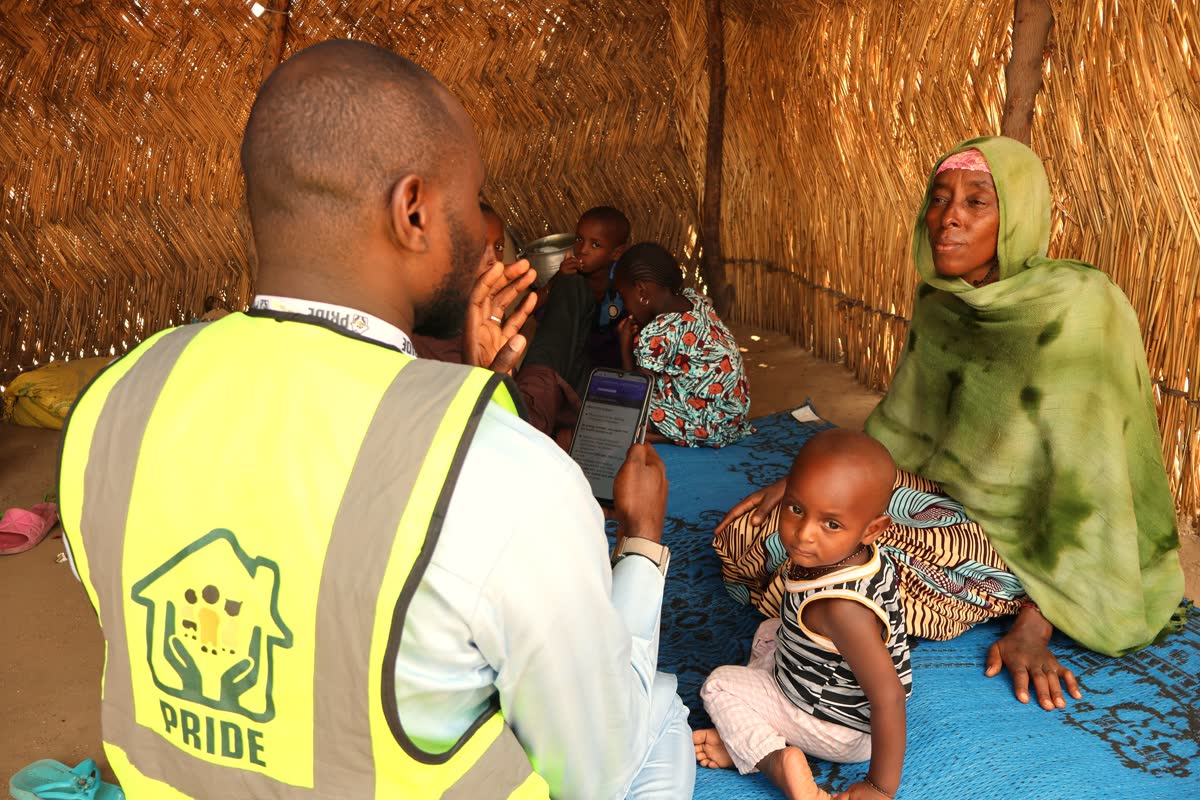
A PRIDE frontline worker in a hi-vis vest, seen from behind, holds a phone showing a Connect consent form while talking with a woman and four children sitting on a mat inside a thatched shelter.
A visit under way, recorded on Connect as it happens. (Photo credit: PRIDE)
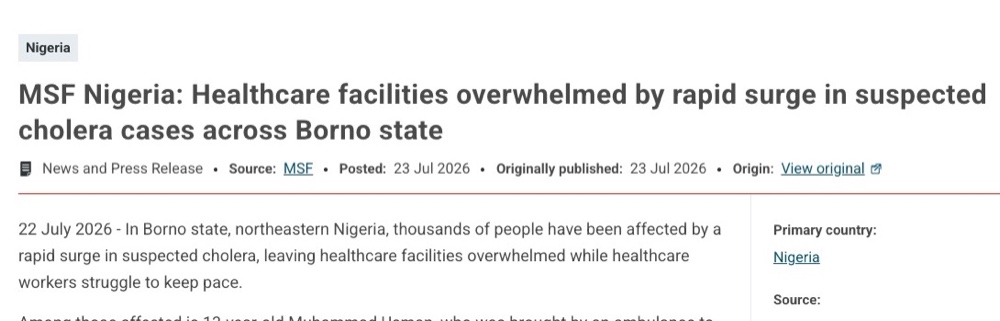
The ReliefWeb headline: MSF Nigeria: Healthcare facilities overwhelmed by rapid surge in suspected cholera cases across Borno state. Source MSF, posted 23 July 2026, with the opening lines of the release.
Funders

31 July 2026

The end result

  1. $20,000 80% to the frontline organization 20% Connect platform fee
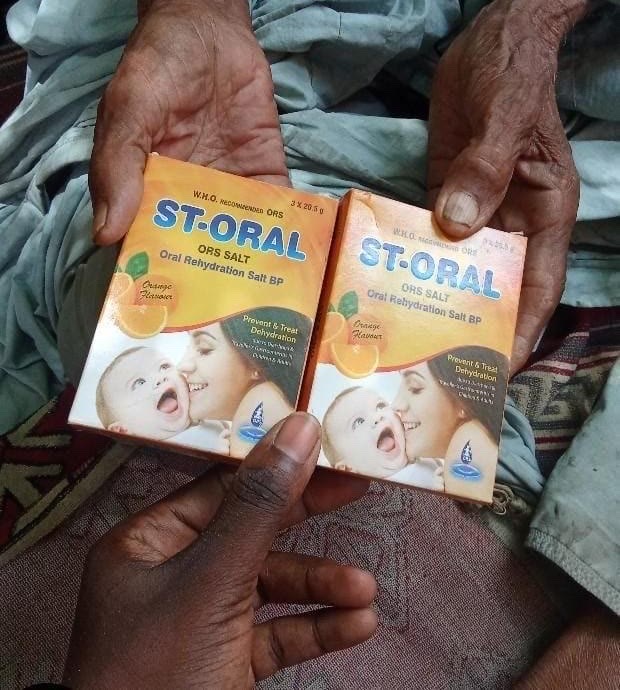
  2. Two hands hold open two boxes of ST-ORAL oral rehydration salts, while a third, smaller hand reaches in from below to steady them.
    Photo credit: PRIDE
    5,187 Households reached 10,338 oral rehydration solution (ORS) co-packs and 5,187 water-treatment sachets delivered
  3. 4,603 Verified household visits, meeting payment criteria $4.34 per verified visit
  4. 1,777 Cholera patients referred to health centres, all of whom recovered

Already present, before the emergency

Local organizations are often already there before an emergency. What they lack is timely access to funding. Connect matches funders who want to support service delivery with the organizations already positioned to deliver it.

Start a conversation Pick the program, geography, and amount.
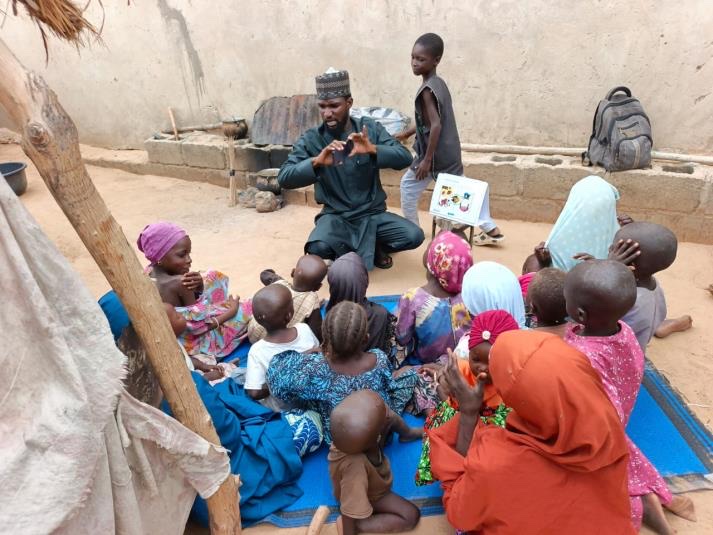
A community worker kneels on a mat demonstrating handwashing to a large group of children and carers gathered around him in a compound.